Category: Main

  • Euthanasia: My letter to Tas MHAs 9 Oct 2013

    Last Wednesday I wrote the following letter to all 25 Members of the House of Assembly of the Tasmanian Parliament briefly stating my reasons for asking them to oppose the euthanasia legislation to be voted on this coming Tuesday.

    Please pray that our politicians will oppose this deadly legislation.

    “Dear <politician>

    I note with concern the recent introduction of the Voluntary Assisted Dying Bill 2013 by the Members for Franklin. [Note: Premier Lara Gidding and Greens’ Leader Nick McKim]

    I am writing to add my voice to the many who are calling on you to vote against this Bill in the House of Assembly.

    My concern with the Bill is at its most most fundamental level of principle. There is no form of implementation or bureaucratic safeguards that can alleviate its fundamental flaws.

    I draw your attention to the 1998 Inquiry by the Community Development Committee of the House of Assembly which emphatically rejected the legalising of euthanasia. The only thing that has changed since that inquiry is that the expertise of palliative care has improved.

    In particular, I note, that the Bill is:

    • DISCRIMINATORY. As the 1998 Inquiry into this issue concluded, “the legalisation of voluntary euthanasia would pose a serious threat to the more vulnerable members of society and that the obligation of the state to protect all its members equally outweighs the individual’s freedom to choose voluntary euthanasia.”

    • UNCOMPASSIONATE. The unavoidable characteristic of a framework for euthanasia is to implement procedures that affirm the sentiment that a person’s life is not worth living. Compassion affirms life and denies that human value is contingent on circumstances or attitudes.

    • UNSAFE. We are currently being made aware through advertising campaigns of issues of elder abuse, often perpetrated by family members and involved decisions that are “voluntary” in an administrative sense but coerced in reality. This Bill expands the scope of elder abuse to literal matters of life and death.

    • UNNECESSARY. Despite the protestations of individuals that euthanasia is happening already in the guise of pain management, serious inquiries such as that in 1998, have concluded “…that a doctor was not legally culpable for manslaughter or murder if his intent in withholding or withdrawing medical treatment from a patient who subsequently died was to relieve the patient of the burden of futile treatment in accordance with prudent medical treatment. Likewise the administration of sedative and analgesic drugs to terminally ill patients for the relief of pain and suffering even when it is foreseeable that such action will shorten life is not illegal whilst the intent is to provide palliation and not to deliberately kill the patient.”

    • IRRESPONSIBLE. Civilised societies rightly restrict their governments from being explicitly and deliberately involved in the death of their citizens. This is an absolute line in the sand that is a fundamental protection. This legislation would add an exception to this principle so as to render that protection non absolute and contingent.

    • ILL-ADVISED. There has been little consultation of any substance by the proposing members. The discussion paper produced earlier this year was notable for its lack of rigour and balance. A change of this magnitude to Tasmanian society warrants, should it be considered at all, warrants a process that is above reproach.

    I have also asked some of my Anglican colleagues from your electorate to make themselves available if you should like to discuss this matter with them.

    In your electorate you may contact…[Contact details]

    Yours sincerely,

    +John

    Bishop of Tasmania

    See also, Euthanasia resources on my blog which can be accessed here or through http://imaginarydiocese.org/bishopjohn/euthanasia-resources.
  • Depression, disability & ‘safe’ euthanasia

    Excellent research based article by Hanna Graham of the University of Tasmania in yesterday’s The Advocate newspaper. In part,

    Many disability advocates oppose euthanasia and assisted suicide on the grounds that it has adverse implications for people with disabilities, whether or not they are eligible for it.

    People who choose to live with symptoms and conditions that others call `intolerable suffering’ and `poor quality of life’ may find pro-euthanasia messages that some people are `better off dead’ and `some lives are not worth living’ offensive and stigmatising.

    Acclaimed British paralympian Tanni Grey-Thompson recently described assisted suicide as “a chilling prospect for disabled people” (The Times, 23/09/2013).

    She argues that legalising it “reinforces prejudices for people with disabilities” and makes them “afraid of a law that would offer a lesser standard of protection to seriously ill people than to others.”

    James McGaughey, Executive Director of the Office of Protection and Advocacy for Persons with Disabilities in Connecticut agrees that disability advocates are “deeply concerned”, saying “the disability rights movement [is] punctuated with stories of individuals who “just wanted to die” before coming to realise they could still lead good, contributing lives.

    Advocates worry that some people would never get to that realisation if assisted suicide becomes legal.”

    The conclusion,

    Saying the proposed Tasmanian Voluntary Assisted Dying model is based on Oregon, Belgium and the Netherlands, while denying that the euthanasia of vulnerable people could happen here means proponents may be willing to downplay or ignore what is already happening elsewhere.

    Thoughtful discussions of euthanasia and vulnerability need to extend deeper and further than the narrow and uncomplicated view that this debate is simply about a purported individual `right to die.’A compelling evidence-based case for changing the law has not been produced in Tasmania.

    The risks of proceeding with the proposed model are not justified.

    Complete article, Depression, disability and ‘safe’ euthanasia  also the Researchers’ Report, A Response to Giddings & McKim’s euthanasia proposal.

  • A Tasmanian Story of Hope

    I was speaking to someone recently who shared this story of hope with me:

    The story began by taking a loaf of bread and giving it to a young fella.  He was living in a camping ground and he was homeless before that.

    From the loaf of bread he moved in to live with a mate and after that he started moving furniture and he realised the love of Christ had been shining through (our church helps get furniture for strugglers).

    After a few months of helping and receiving, he decided it was about time he did something with his life.  He told me that late one night he got down on his hands and knees and asked Jesus into his life.  At that stage he was also suffering with HepC and at various times been in prison and asked to go on a program that the Government ran.  Each time he was knocked back.  His psychiatrist didn’t think he was up to it yet.

    Once he became a Christian he went to them again and this time was accepted.  Originally it was to be 12 months BUT it was only 6 months.  His liver had begun to heal.  He had 6 months where he fought.  There were times when he wanted to give up and he was encouraged just to go another day.  Each time his mood improved.

    All this time he is going to church and getting involved in the Christian community and also helping to give out to people.  He was no longer living on the streets but settled into a house with four walls and a roof, that were important to him.  He actually joined Alcohol Anonymous and gave up the drink.  He has been sober now for 2 ½ years.

    Now he is an active member in the congregation, reading during church and has even taken a service BUT the amazing thing is his liver has been healed.  He was telling me one day that he had a death sentence of 2-3 years but now he feels as though he has a completely new life.

    I had the pleasure of baptising him at the beginning of the year.  He told me afterwards that he said that he felt so clean – the slate had been wiped clean.  At other times he has told me he felt Jesus scruffing him by the collar and dragging him up out of the gutter because that was where he’d reached – rock bottom.

    At times he still struggles.  BUT, he knows at the end of the day Jesus is there for him and he reaches out to him.  He gets into the Word and we discuss at numerous times what he has been reading.  His family has been amazed by his progress.   What they remember of a drunken, homeless man, sleeping in car bodies, is no longer there.

    How he began this life is another little story.  He had a father who was a Christian and was killed in a motorbike accident on his way home from work.  He still remembers his father used to work for the Army and he remembers that daunting service he went to as a 6 year old.  His grandfather took him under his wing because his mother had remarried and the new husband didn’t want the child.  So the grandfather took him under his wing and he promptly died when the young fella was 12 and from then he just drifted in and out of trouble, in and out of jail, alcohol, drugs…  you name it.

    So he has come on an amazing journey.  He told me a while back that once he had been cleared of the HepC, his liver was completely healed and he had been given a new life.  The old life had gone.  In Jesus we are given new lives.

    He has just finished a TAFE course and now hopes to start up his own little business.  It won’t make him millions but he said as long as he can get off the pension he won’t be a burden to society.

    So just pray for this young man, that the Lord will continue to guide and direct him in his life that he now has.   Amen.

  • Euthanasia: Pastoral Letter 3 Oct.13

    Today I sent the following Pastoral Letter to all Anglican Parishes in Tasmania asking that the letter and attachments be made available to Parishioners [by email circulation and/or copies available at Parish Centres]. The Pastoral Letter (without attachments),

    3 October 2013

    Pastoral Letter – Voluntary Assisted Dying Bill 2013

    Dear Brothers and Sisters in Christ,

    You will have learned recently that the Hon. Lara Giddings and the Hon. Nick McKim, Members for Franklin have recently introduced the “Voluntary Assisted Dying Bill 2013” to the Tasmanian parliament.

    This Bill would allow those who meet certain eligibility criteria to be prescribed and receive a lethal injection. This Bill is a direct threat to the lives of Tasmanians, particularly the sick and elderly. This Bill embraces a philosophy of human value defined by convenience and personal capacity. It stands against the responsibility of societies and governments to implement compassionate, timely, and effective care for those who are unwell or disabled in some way.

    In particular, at a time when our awareness is being raised on matters of suicide prevention, and the risks of abuse faced by the elderly, it is inappropriate and irresponsible to propose a law that communicates the abhorrent notion that for some “your life is not worth living.”

    I am calling upon the Members of the House of Assembly to vote against this bill and its contemptible derogation of human value. In a life-affirming healthy society a government is never allowed to intentionally and deliberately cause the death of one of its citizens. We cross that line at our peril.

    I have attached to this correspondence some information about how you can work with your parishes. I have also attached a separate document for each of the electorates. Please download the document relative to your area and contact your local members of parliament as soon as possible.

    I am also making resources available on my blog which can be accessed here or through http://imaginarydiocese.org/bishopjohn/euthanasia-resources.

    Yours sincerely in Christ’s Service

    Shalom,

    John Harrower
    Bishop of Tasmania

    See also, Tasmanian Synod ‘No’ to Euthanasia  and  Should We Legalize Voluntary Euthanasia and Physician Assisted Suicide? plus  Euthanasia Resources.

  • Creative yarn 2 Bishop’s socks!

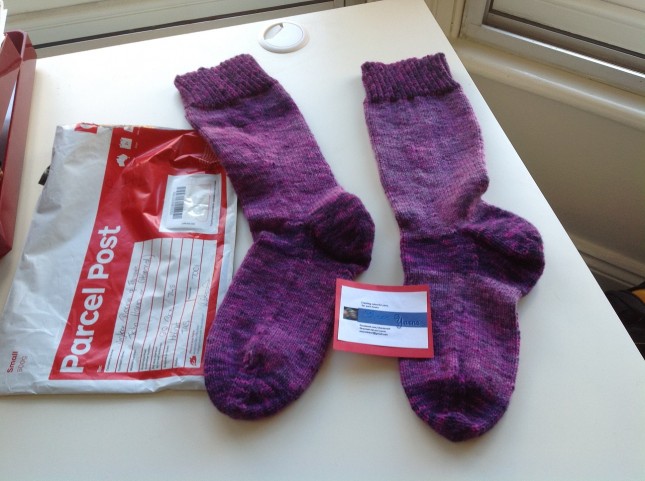
    Life is full of surprises. The postal service delivers its share of surprises as last week’s mail proved.

    Hi John, I couldn’t help myself when Josh named the yarn he had dyed ‘Bishop’s socks’. I had to have them made up into a pair. So next winter on a cold blustery day you can be very ‘purple’ in your shirt, beanie and socks!! Blessings, Naomi

    2013-09-10 11.38.112013-09-10 11.38.46

  • Egypt Special Appeal (2013)

    Bishop of the Egyptian Anglican Church, The Most Rev. Dr Mouneer Hanna Anis writes,

    Help us to Help Others

    Dear brothers and sisters,

    Greetings in the Name of our Lord Jesus Christ!

    The past week has been traumatic for Egyptians. We witnessed bloodshed on our streets, vandalism and the deliberate destruction of churches and government buildings in lawless acts of revenge. One of our Anglican Churches was attacked, and other ministries received threats. We praise God that our churches and congregations are safe, but we grieve for the loss of life and for the churches which were burnt over the past week in Egypt.Special Appeal 2013The Anglican Church in Egypt serves all Egyptians, especially the disadvantaged and marginalized, through our educational, medical and community development ministries. We seek to be a light in our society, and we continue to serve our neighbours in the difficult situation which surrounds us. Unemployment is at a record high, there is a lack of security on the streets, the economy is in decline, and poverty is crushing for many people in Egypt.

    We need your help

    Through your support, we hope to help in the following areas:

    • Provide basic needs for the poorest of the poor (food, health care, children’s education).
    • Building the capacity of young adults in order to find work through vocational training and small business projects.
    • Spiritual ministry.

    Helping the poorest of the poor

    In many cases these are the most affected by the situation in Egypt. As the church, we want to practically show the love of God and provide for people in this challenging time in Egypt.

    Some examples of ways that you could give are;

    • Provide a meal for a poor child ($1 US per day)
    • Visit to a doctor ($2 per visit)
    • Food to feed a family ($5 per day)
    • Subsidy for nursery fees for a child ($20 per month)
    • School fees for a year ($50 per year)
    • Emergency surgical operation ($100 per operation).

    Building the capacity of young adults

    It is very difficult for young people to find jobs, and the Diocese is empowering young adults (both hearing and deaf) through vocational training and micro-loans.

    Examples of this are;

    • Vocational training for 2 months ($150)
    • Vocational training for 6 months  ($450)
    • Loan for a small business project  ($750)

    Spiritual ministry

    We continue to serve our congregations, and to teach the Word of God. You can;

    • Give a Bible ($3 per Bible)
    • Transport for children to attend Sunday School ($20 per session)
    • Subsidy to attend an Alpha Course ($20)

    Please consider supporting us prayerfully and financially. If you would like to contribute financially, please give to one or more of the three categories above. If you send a non-designated donation then we will allocate the donation to the most needed category above.

    May the Lord bless you!

    +Mouneer


    To make a donation

    If you are in the US or  the  UK,  please  contact  our Partner Organisations

    In Egypt or other countries, please contact the Diocese Partnership Office through Ms. Rosie Fyfe (rosie@dioceseofegypt.org)

    Website www.dioceseofegypt.org

    If you would like to download a PDF version of the appeal: Special Appeal for Egypt

    See also, Bishop’s message of peace while visiting Tasmania last year.

  • The Cross in My Pocket: continuing blessings

    I received a lovely note from Barbara Griffiths of St Leonard’s Parish when I returned from my annual leave recently:

    I wanted to share with you about this lady who was a visitor from England at St Peters.  She was telling me about this cross she had in her pocket, that went with her everywhere,  I shared with her the fact I had bought a card from Griffith when we were there a few weeks ago, with ‘The Cross in my pocket’ poem on it.

    We then went together into our new (St Leonard’s Parish) building, and I opened the package with the new Tas Anglican (magazine) in it only to see the front page.  I turned and showed it to her.  She beamed and said “I want to take one with me back home”.

    A great joy to her and to me.Cross in pocket

    To read my article ‘The Cross in My Pocket’ in the August Tas Anglican click here.

    The photo on the left is of my Mother’s card, ‘The Cross in My Pocket’.

    The front cover of the Tas Anglican that Barbara speaks of can be viewed here.


  • Prayers for the Federal election

    There is a prayer gathering for all Christians at St. David’s Cathedral, Hobart on Monday 2 September, 12 noon – 2.00pm.  It would be wonderful to see many gathered in prayer at this important time for our nation.

    You may also like to use the following litany in your prayers in the coming week.

    Lord of every time and place, God of integrity and truth,
    we pray for wisdom as we prepare to vote in the Federal election.
    For this land and the diversity of its peoples, we thank you, Lord.
    For all who work for peace and justice in this land, we thank you, Lord.
    For leaders who serve the common good, we thank you, Lord.
    For robust democracy and freedom to participate in public life,
    we thank you, Lord.
    For media scrutiny and open debate, we thank you, Lord.
    Let us pray to the Lord, saying, ‘Hear us, good Lord’.
    Bless those who administer the electoral process,
    that they may uphold fairness, honesty and truth.
    Hear us, good Lord.
    Impart your wisdom to all who propose policy,
    that their promises may serve those in greatest need.
    Hear us, good Lord.
    Give integrity to party leaders, candidates and campaign workers,
    and keep them from deceit and corruption.
    Hear us, good Lord.
    Protect all engaged in public life, with their families, friends and colleagues,
    that nothing may demean or do them harm.
    Hear us, good Lord.
    Direct those who influence opinion through the media,
    that we may listen, speak and vote with sound minds.
    Hear us, good Lord.Lord of every time and place, source of all authority,
    we pray for wisdom as we prepare to vote in the Federal election.
    Give us a Parliament committed to the priorities of your kingdom,
    so that peace, compassion, truth and justice may prevail among us,
    and make us a blessing to all peoples, through Jesus Christ our Lord. Amen.God, bless Australia, guard our people, guide our leaders and give us peace;
    for Jesus Christ’s sake. Amen.

    More details http://saintdavids.org.au/event/2013/08/praying-federal-election/

  • The Cross in My Pocket

    One of the special times I have as Bishop is sharing with my team at the Diocesan Office in our regular staff prayers.

    We take turns in leading and during my turn in July I recalled finding myself with my sisters looking through my mother’s handbag following her death. It was an immensely intimate experience which produced its share of tears and treasures.

    In Mum’s handbag, positioned between the pages of her small New Testament was a poem with a small wooden cross glued to it: somewhat tattered, well fingered and obviously treasured. The words of ‘The Cross in My Pocket’ are quite remarkable and my sisters insisted that I have it. I treasure it.

    I showed this treasure to the staff team and we shared about the physical prompts we use to remind us that we are a Christian, no matter where we may be.  I wonder if you have some form of physical identification that may be hidden away in your handbag or jacket pocket that identifies you with Christ and of the price He paid for us.

    One of our team, Ray, recalled the theme of my Prayer Retreat ‘Les Miserables: REFLECTION and LEARNING and LIVING’ and my time sharing some of this with the Howrah Parish.  Ray recalled the paroled convict, Jean Valjean, and how he not only received the grace of God in abundance but how, the very next day, he reverted to his violent human ways. Valjean wept in remorse and throughout his life he carried the bishop’s candlesticks with him to remind him that he belonged to God.

    During the team’s discussion, Leonie disappeared and reappeared with her own tiny cross-stitched ‘Cross In My Pocket’ which had been given to her as a gift from a special lady in her parish. It was a cross that she could pass on to someone as a prompt in their pocket reminding them of Christ’s love in a time of need.

    For Annette it was the serendipity of that moment – my story, Leonie’s cross, and Ray’s comments – which in itself was an ‘ordinary’ moment and realising that God had a hand in it. We had lived one of those ‘God-incidences’!

    Life continually reminds us, and Satan accuses us, of our own sinful nature and so we seem to require ‘reminders’ of God’s grace given to us in Christ.

    I enjoy reflecting on these reminders or prompts as we go about our daily life. They encourage my discipleship in a world that appears hesitant, if not actively resistant, to people openly wearing, or carrying, Christian forms of identification, demonstrating our blessings and striving to serve Him better in all that we do and say.

    What do you use to remind yourself daily of Christ’s presence in your life? My Mum had a Cross in her pocket.

    Click here for the link to the Tas Anglican.