Month: April 2011

  • Growing Up: Innocence to Inner Sense (AASN Conference 2011)

    AASN, Australian Anglican Schools Network, will be hosting a national conference in Hobart from 12-14 August 2011.

    Keynote speakers include Rt Rev. Dr Chris Jones, who will be speaking on “Nurturing a Moral Imperative” and Melinda Tankard Reist on “Toxic Culture: Challenging the Sexualisation of Girls”.

    For more info and to register for this conference go to their website.

    Read more about Melinda Tankard Reist’s book “Getting Real: Challenging the Sexualisation of Girls” here and read reviews of her book here.

  • ‘Call to open hearts on asylum’

    On Easter Sunday I spoke out for Tasmanians to support asylum seekers who are coming to a new detention centre near Hobart.

    The Mercury article accurately reported my view, see following, but I was deeply disappointed at the ‘Comments’. Perhaps I shouldn’t be surprised at the tone of the comments but how difficult it is to get gracious and reasoned conversation and engagement over issues where differences of opinion are held.

    Too readily Good Friday corners our conversation and confronts the hope of Easter Sunday.

    The Article in the Mercury is by CRAIG HOGGETT | April 25, 2011 12.01am and it reads:

     ANGLICAN Bishop John Harrower has called on Tasmanians to show compassion for asylum seekers as debate rages over plans for a detention centre near Hobart.

    After joining other church leaders for the traditional Easter Sunday parade around Hobart yesterday, Bishop Harrower said he was disappointed to hear about anti-Muslim sentiment at a public meeting at Pontville last week.

    Locals at the meeting spoke out against the Federal Government’s move to set up a temporary detention centre at Pontville.

    Bishop Harrower said people needed to separate the decision about where to house detainees from the people themselves.

    He said he was saddened to hear that Brighton parish minister Kaye Paice was booed for speaking out during the meeting on Thursday night.

    “I would like to think Tasmanians would open their hearts, not necessarily to the process, but embrace the asylum seekers,” Bishop Harrower said.

    “We can be critical of the decision by the Federal Government, certainly.

    “But we need to give the people Tasmanian hospitality and make them feel welcome.”

    Bishop Harrower pointed to his friendship with Hobart Muslim leader Imam Sabri Samson as an example of tolerance.

    On the eve of Anzac Day, the ecumenical parade combined the religious message of Easter with the selfless story of stretcher bearer John Simpson and his donkey in World War I.

    Christians of every denomination celebrated the resurrection of Jesus Christ with a day of family fun at Parliament Lawns.

    See the Mercury article plus photo and comments, Call to open hearts on asylum.

    Interestingly I reread an article I wrote just 2 years ago around ANZAC Day, When it comes to boat people whatever happened to concern for the underdog? Sadly, it seems that little has changed these past two years. 

    An informative response to some popular but incorrect views on asylum seekers, Refugee Mythbusting Animation – GetUp!

  • An Easter Attitude

    Thoughtful and thought provoking article on Easter hope from the Vicar General, Bishop Chris Jones.

    I can’t speak for New Zealanders or the Japanese, but I believe Australians like to see themselves as resilient. Perhaps we feel that resilience is somehow built into our genes over generations, as we constantly bounce back from adversity, all too familiar in a land of ‘droughts and flooding rains’.

    I think there is more to it than that; that our resilience has its origins in our Christian heritage. For Christians, there is a deep-seated inner joy and optimism, unaffected by external adversity, which sustains and empowers us. Theologians call this Christian Hope.

    Of course, Christians respond to natural disasters, human folly and personal suffering just like anybody else: they are tragic and sad events. But, beneath the surface, we are sustained by Christian Hope, that inner sense that God is with us in the tragedy and will see us safely through the valley of the shadow of death.

    That’s an Easter attitude: we are sustained through the tragedy of the crucifixion by the joy and hope of the empty tomb. That may be ‘the greatest story ever told’ but it is far more than a story – for Christians, it is also a personal experience of Christian Hope. . . .

    We must not take that life-affirming source of resilience for granted.

    We need to tend constantly our reservoir of Christian Hope, to build it up and care for it throughout our Christian journey. In traditional terms, we need to ‘practise the presence of God’, to remind ourselves often that God is with us, in our personal lives and in the sweep of history. We do that through immersing ourselves in the scriptures, through receiving the sacraments, through prayer and meditation, through worship and fellowship or, most effectively, through all of the above.

    At the heart of it, we nurture our Christian Hope through the timelessness of the Easter story, through hearing it and living it, as we contemplate a God who was able to bring the hope of the empty tomb out of the stark tragedy of the crucifixion.

    See the full article in the April 2011 Tasmanian Anglican magazine, An Easter Attitude.

  • Easter & the meaning of suffering

    Thoughtful article from Barney Zwartz, The Age, on “acts of God”, suffering and the relevance of the events of Easter.

    He quotes a book from a long ago philosopher brother in Christ, Bruce Langtry as well as Peter Adam and Wolterstorff, among others. I liked the comment on natural disasters as  “acts of God”:

    Although the concept survives in some countries, ”acts of God” have disappeared from the insurance industry in Australia, which now covers many natural disasters it once did not.

    But, as leading Australian philosopher Tony Coady points out, talking about ”acts of God” this way is independent of belief in God. He says it is a shorthand way of suggesting no human caused a particular disaster, such as an earthquake, so no one can be blamed. The only result is that God gets a bad press: he gets blamed for tsunamis, but no one calls a marvellous growing season for farmers an act of God.

    More comments,

    Whether God is responsible for natural events has been hotly debated by theologians, who distinguish between what he actively wills and what he merely allows. . . .

    Melbourne philosopher Bruce Langtry, an evangelical Christian, believes he has found a formula (described in his book, God the Best, and Evil) that renders this distinction unnecessary, and avoids the supposed contradiction between God’s goodness and power exposed by suffering.  . . .

    Philosopher Nicholas Wolterstorff, who lost his son in a mountaineering accident, wrote in Lament for a Son that he could not ”fit it all together” with either of two common attempts to do that, either by saying God did it or by saying there was nothing God could do about it. ”I cannot fit it together at all. I can only, with Job, endure. I do not know why God did not prevent Eric’s death. To live without the answer is precarious.”

    Wolterstorff concludes that suffering is ”deep down at the centre of things, deep down where the meaning is. Suffering is the meaning of our world. For Love is the meaning. And Love suffers. The tears of God are the meaning of history.”

    That is the Christian message of Easter, that Easter represents the ultimate act of God – that, according to their faith, God took on human form to die for humans, and be resurrected. Ridley’s Peter Adam says: ”The act of God in Jesus Christ is not that of a remote and uncaring god. God is personally present in Jesus Christ, in his humble birth, life of service, atoning death and resurrection, and present to rescue and help us.”

    Well worth reading more: The meaning of suffering.

    See also seven articles on suffering by various contributors, Christians respond to suffering #1, through to  Christians respond to suffering # 7.

  • The stethoscope

    A YouTube clip (2.20 minutes) for the congregation on Easter Day, or any day!  🙂

    See, http://www.angelfire.com/ak2/intelligencerreport/stethoscope.html  Compliments of Richard Steven.

  • Liturgy of Reconciliation

    The value of having the worship service in a booklet that I can take home and ponder has been affirmed once again.

    Following the Good Friday Service of Meditations at the Cathedral, the service booklet including the prayers for reconciliation has been sitting on the dining room table.  They were there to discuss at lunch, then over a cuppa and hot cross bun as we headed for the 6pm prayer meeting and visiting the Heartz Ministry Easter art display at the Longley International Hotel and at home this morning over mate’.  

    Liturgy of Reconciliation

    After a time of silence the minister leads the Congregation in the litany.

    All have sinned and fall short of the glory of God. (From the Apostle Paul’s letter to Rome, 3:23)

    The hatred which divides nation from nation, race from race, class from class,

    Father forgive.

    The covetous desires of people and nations to possess what is not their own,

    Father forgive.

    The greed which exploits the work of human hands and lays waste the earth,

    Father forgive.

    Our envy of the welfare and happiness of others,

    Father forgive.

    Our indifference to the plight of the imprisoned, the homeless, the refugee,

    Father forgive.

    The lust which dishonours the bodies of men, women and children,

    Father forgive.

    The pride that leads that leads us to trust in ourselves and not in God,

    Father forgive.

    Be kind to one another, tender hearted, forgiving one another, as God in Christ forgave you.

    (From the Apostle Paul’s letter to the Ephesians, 4:32)

    The prayer has too many connections to both my personal life and the life of the wider community.

    My prayer:

    May the Holy Spirit nurture my life through participation in and reflection upon the prayer life of the people of God and in particular today, upon this Good Friday litany. In Christ’s name. Amen.

    Note: If I recall correctly the Dean said the liturgy comes originally from Coventry Cathedral with which our Cathedral has a ministry fellowship.

  • Of cracked pots and Easter

    My Easter message appears in Tasmania’s three major newspapers today, ‘Of cracked pots and Easter’:

    Holidays are great. 

    To set your envy juices flowing, I have just had eight weeks of holidays. Can you forgive me for that? Forgiveness is a good Easter motive.

    Eight weeks holidays and we went away just once: to Tasmazia, an iconic Tasmanian experience of mazes, lavender and the Village of Lower Crackpot.

    I declare an interest: I am a member of Clan Crackpot. I wore my Crackpot tartan tie for the day, and am also the Bishop of Lower Crackpot. The Village Motto is ‘Fractis Sed Utilis’, which translates, ‘broken but still useful’, which a cracked pot is.

    This motto holds belief, meaning. The village founders’ idea, ‘broken but still useful’, shaped their work and perseverance.

    Ideas are important. Ideas shape behavior.

    During my holiday I reread Viktor Frankl’s ‘Man’s Search for Meaning’ which relates his experiences as a Nazi concentration camp inmate. He concludes that holding a belief is what gives a person the strength to go on – even amongst suffering and death.

    Ideas shape life. What we believe matters. Ideas have consequences. Ideas shape deeds.

    Easter belief holds life-giving meaning.

    The mutilated body on a cross of wood outside the city wall holds meaning. The idea that evil exists is shown to be real: just look at that cross!  

    Love exists. The person on the cross gave his life for the good of others, of us; hence, ‘Good Friday’.  

    The idea, the reality, of God who suffers with us and for us, gives meaning to life.

    The empty tomb gives meaning: death is not the end. Jesus Christ has victory over death.

    The life, death and resurrection of Jesus Christ give meaning to life.

    In Christ we are ‘broken but still useful’, children of God walking in hope in a chaotic world.

    May this resurrection hope bring meaning and renewed life this Easter.

    Also, Easter message: Healing through forgiveness  and  The weekend that changed the world  and  Chocolate Easter Bunny with a Difference.

  • Is euthanasia an act of love?

    One of the repeated justifications for euthanasia claimed by the pro-euthanasia side is that it relieves the burden of the suffering as an act of compassion and love. Yet, this “compassion” or “love” is largely left undefined in modern discourse, including by those who advocate for euthanasia. When it is discussed by these advocates, love and compassion are often equated with feelings.

    Read the rest of Joel Hodge’s article, “Is euthanasia really an act of love to help the suffering?“

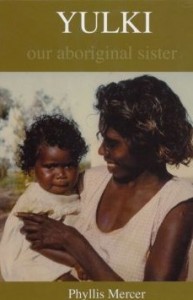
  • “Yulki: our Aboriginal sister”

    Last November COMPASS ABC TV aired a show about Yulki: Arnhem Land Priest (see my blog post about it here). Now her amazing story has been written down in a book, “Yulki: our Aboriginal sister” by Phyllis Mercer.

    At the age of 21 Phyllis Mercer, a graduate of Melbourne Teacher’s College, left her parent’s home in Melbourne to join her husband John Mercer in the task of pioneering at Rose River, now called Numbulwar, in the remote south-east of the Northern Territory… It was there she met Yulki, also a newly married woman. They became companions. Phyllis was the only white woman in the area for most of the time up until new staff arrived nearly three years later. Phyllis’s lifestyle had completely changed for she had no vehicle and no modern conveniences. The Lord had called her to be a missionary and He had prepared her for the changes and given her responsibilities to bring the message of the Gospel to these Aboriginal people. Yulki was one of them who embraced the Gospel… (excerpt from the back cover of “Yulki: our Aboriginal sister” by Phyllis Mercer)

    Many thanks to Phyllis for recently sending me this book in the post and for putting this amazing story down into words. Please let me know if you are interested in purchasing this book as Phyllis and her husband, John hope to come down to Hobart in May to make it available for purchase.

  • Technology aids Gospel proclamation

    Earlier this week I appeared in The Mercury article “Clergy’s faith in technology” showing off my Bible app on my iphone 🙂

    Technology continues to be used to spread the Gospel to all corners of the earth. A good example is MegaVoice.

    Charles Cibene the CEO of MegaVoice said,

    Together with partnering ministries, MegaVoice is committed to engaging four billion non-readers with God’s word using solar-powered audio Bibles.

    Visit their website, here to find out more and to search 8,400 Scripture audio titles in 4,600 languages and dialects. Enjoy!